Version 1 created by Cora Reese, 2026:

The study of gray whale (Eschrichtius robustus) bioacoustics is a relatively young and rapidly developing field of research in which their acoustic repertoire is still being defined across their range. These baleen whales communicate through 11 known call types, each used in different behavioral contexts, migration stages, and environments.
Gray whales in the Northeast Pacific normally migrate from southern breeding grounds in Baja California, Mexico, to northern feeding grounds on Arctic continental shelves. Beginning in 1990, though, some diverted on their northbound migration into Puget Sound to feed on ghost shrimp that live in the sandy, shallow intertidal. Over time, the number of whales visiting the protected waters and river deltas around Possession Sound, Port Susan, and Saratoga Passage, Washington, grew, earning them the endearing nickname “Sounders.” They can be observed feeding near the shore during high tides, where they suction up mud and filter it through their baleen, keeping the ghost shrimp in while forcing mud and water out.
Of the 11 gray whale call types described thus far, 6 were first defined in Dahlheim (1987) from seafloor recorders deployed across their range: in Laguna San Ignacio, Mexico; Washington State; and St. Lawrence Island, Alaska. That study also separated call types into Southern, Northern, and Migratory (S, N, M) variations based on subtle differences in each call throughout the migration of gray whales. The Sounders’ calls fall into the “migratory” or “M” call variations because the Pacific Northwest falls in the migratory path between Mexico and Alaska.
Dalheim’s classification was predated by work from other researchers, but they defined their calls with descriptions such as “knocks” or “croaks” rather than with numbered classes. To this day, these descriptions are still used, but without a standardized alphanumeric system to sort the calls, it can be difficult to annotate them for research. We propose to aggregate recordings across their range and discuss standard labels for specific signals through a shared, open repository (coming soon!).
Bioacousticians studying gray whales in the eastern Pacific have also lacked a centralized call catalog with both spectrograms and audio clips to use as a reference for research and education. This catalog aims to serve as an initial resource for calls made by Sounders to help Orcasound listeners and annotators to recognize and label gray whale calls in the Pacific Northwest.
Future versions of the catalog will include other signals made by Sounders as we discover they are used locally (e.g., Class 5 or 6), and the open source code could be used to eventually build catalogs that include all vocalizations made by gray whales across their range. Further call types (7-11) have been classified since Dahlheim (1987), but there have not been publicly published audio clips of them all. Call types used and call rates both vary based on context — including behavior, depth, predators, time, age of gray whales present, other noise presence, and more.
The clips used in this initial catalog were recorded via suction-cup attached biologgers or “tags” that were attached to Sounders either by drones or with a long pole. The recordings were derived from CATS (Custom Animal Tracking Solutions) tag data deployed in 2015-2016, 2021, and 2023-2024 by Cascadia Research Collective and analyzed by Hannah Clayton of Stanford University (see the Golbogen Lab to learn more about the forefront of cetacean research!). Each tag records accelerometer, video, and acoustic data via a tag video microphone or a hydrophone. These clips were processed using free, open-source acoustic software — specifically Audacity to clarify the calls and remove background noise, and ffmpeg to generate the spectrograms.
It is highly recommended to use large speakers or over-the-ear headphones when listening to these calls due to their low frequencies that aren’t reproduced well by laptop speakers or earbuds!
Class 1
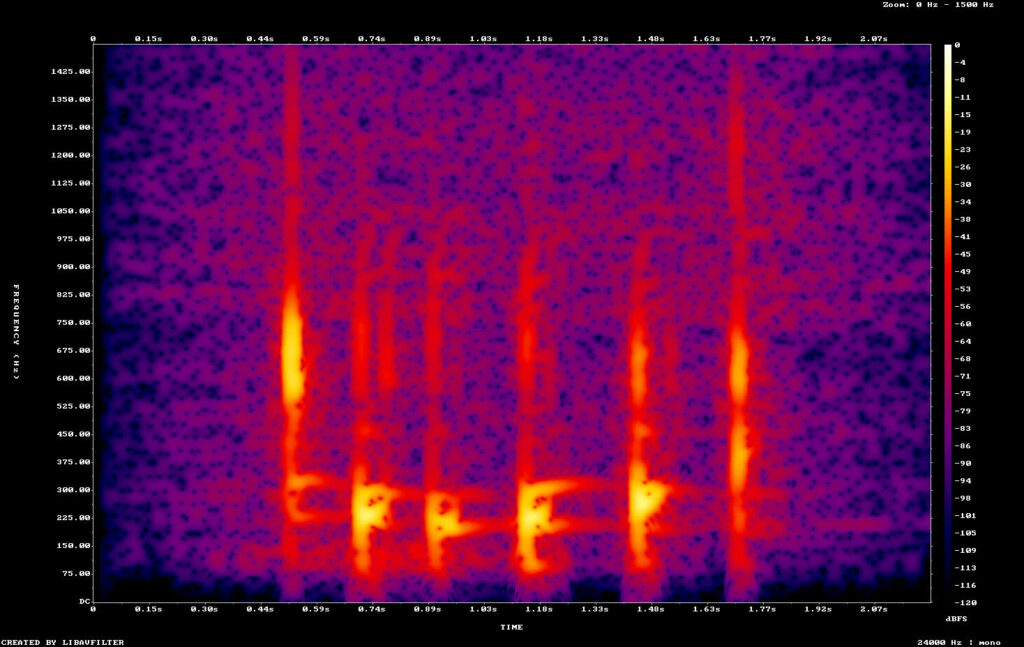
Class 1 calls are described as metallic sounding, frequency modulated, and pulsating (single and multiple, but more often multiple), referred to colloquially as knocks, pulses, or clacks in some literature. Dahlheim (1987) found this to be the most common call in Laguna San Ignacio (the “S1” call), and Stafford et al. (2009) found it to be the most common off Utqiagvik, Alaska (the “N1” call). The S1, M1, and N1 calls are very similar, but have some key differences (described in detail in Dahlheim, 1987).
More recently, class 1 calls have also been separated into 1a and 1b call types (Wisdom et al., 2001). The 1b calls, in comparison to 1a calls, have fewer knocks within a series, longer individual knock duration, and greater inter-knock intervals. Class 1 calls are higher frequency than other calls and highly variable, leading researchers to believe that they may be used for short-range social, behavioral, and reproductive contexts (Charles et al., 2011).
Class 2
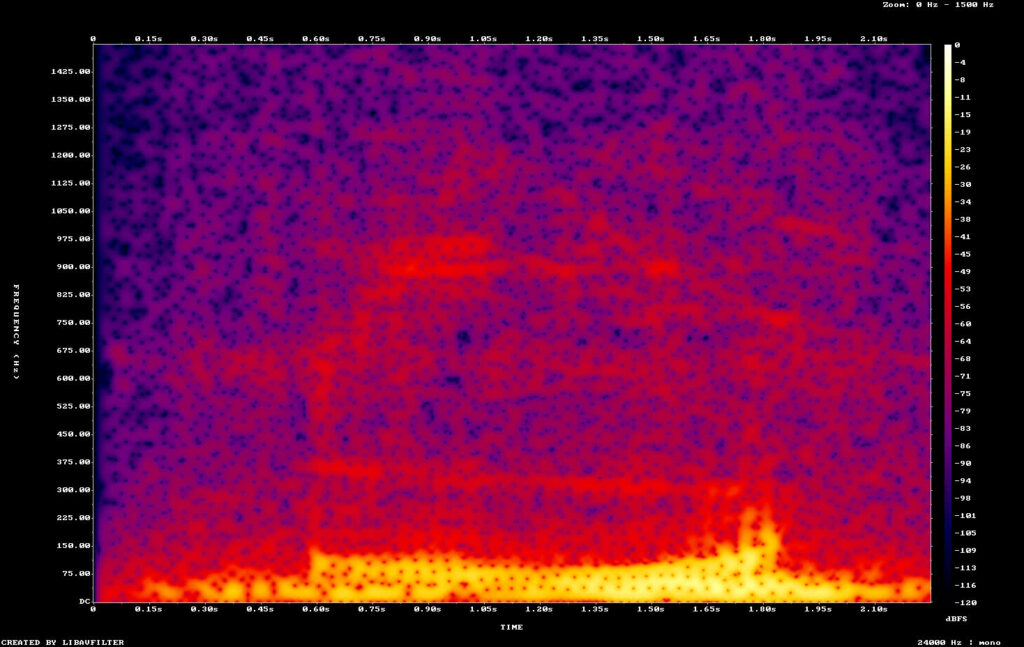
Class 2 calls are metallic, frequency-modulated, non-repeated calls with a rapid up or down sweep. They are longer and lower frequency than class 1 calls (Dahlheim, 1987).
Class 3
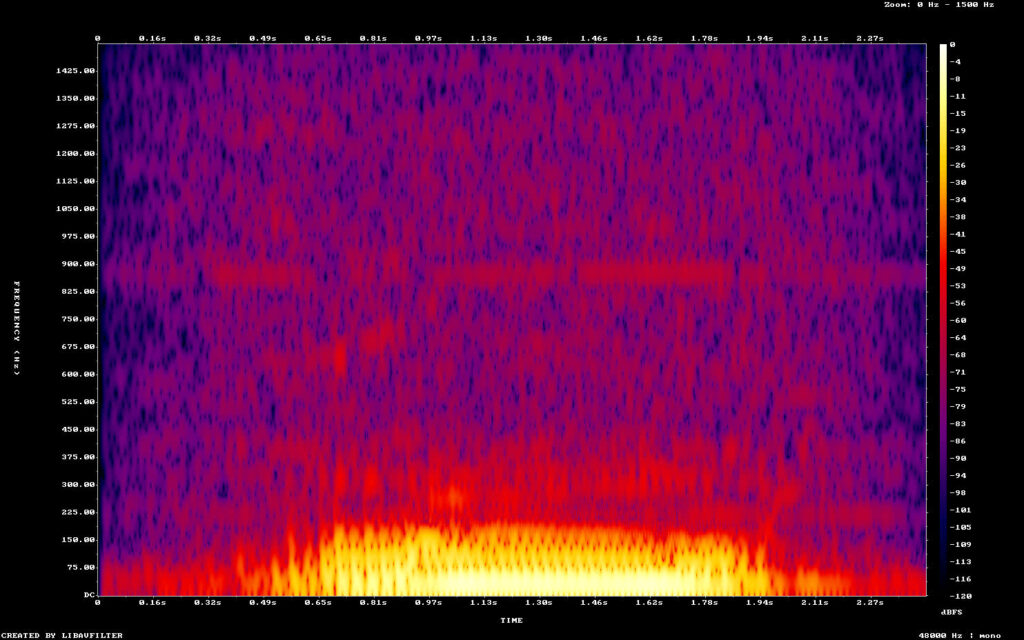
The class 3 call is a longer-duration (1-4 seconds), tonal, amplitude-modulated “moan” (Dahlheim, 1987). This call is hypothesized to be used for long-distance communication due to its low frequency (Burnham & Duffus, 2020).
Class 4
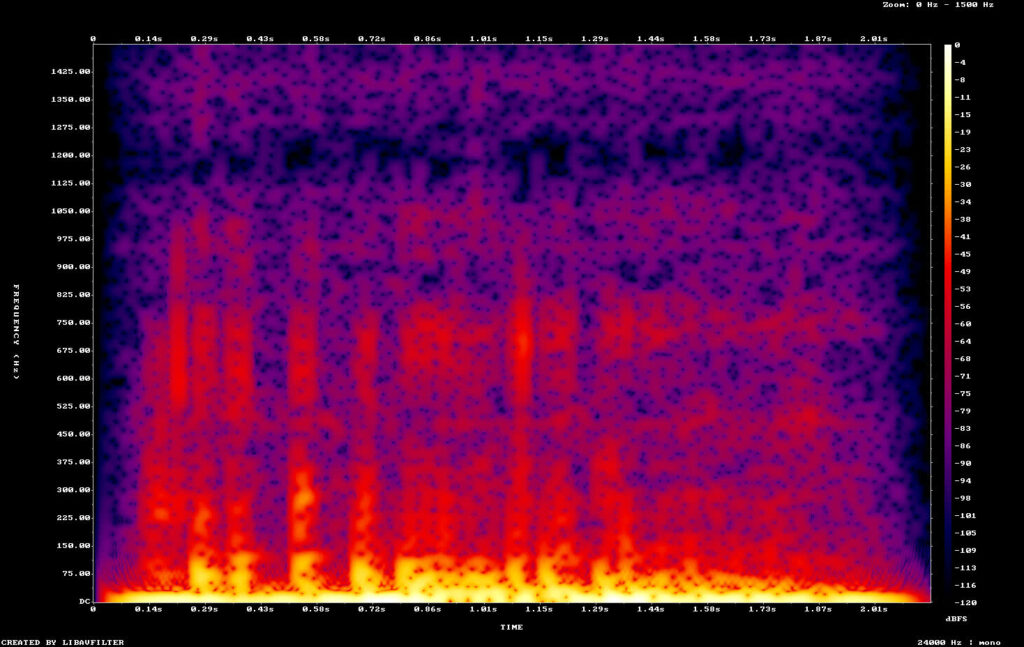
Class 4 calls are short, pulse-modulated, low variation “grunt” signals (Dahlheim, 1987). This call is also considered to be a short-distance communication call (Crane & Lashkari, 1996).
If/when Orcasound hydrophones or future tags or recorders observe the following call classes from Sounders, we will add example clips to this catalog. Over time, we hope that listeners will learn to recognize them all and to mark them in a standard way when annotating Orcasound audio data.
Other call descriptions
Calf calls, or “motherese,” are calls used by mother-calf pairs or in contexts where a calf is present. These calls are higher frequency and more varied. Calls 5-11 are used mostly in calf-related contexts (Charles et al., 2011). Calf-containing groups were found to be silent very rarely. They typically have an intermediate call rate compared to all-adult groups, which are silent for long periods and have short, high-call-rate bursts (Charles, 2011). Calf calls are used for attention-seeking, reuniting a mother-calf pair, and nursing, and their use decreases throughout the season as the calf learns adult calls (Burnham & Duffus, 2020).
Class 5 and 6
Class 5 and 6 are exhalation calls. Class 5 is termed a “bubble blast” and is a release of air underwater. Class 6 is an exhalation of bubbles released just before breaking the surface to take a breath (Dahlheim, 1987).
Class 7
Class 7 are pulsive “growls” (Ollervides, 2001).
Class 8
Class 8, heard first on a tagged whale, are knocks or “ugg” sounds. (López-Urbán, 2018; Ollervides, 2001). They are similar to class 1 calls, but have a higher pulse repetition rate (López-Urbán et al., 2018). This call is also considered to be the most common “motherese” call (Burnham & Duffus, 2020).
Class 9
Class 9, also discovered using tags, are “roars”. (López-Urbán et al., 2018; Ollervides, 2001). This call is frequency-modulated w/ up to 4 harmonics, dissimilar to class 3 calls (López-Urbán et al., 2018).
Class 10
Class 10, similar to class 4, are high-bandwidth grunts or “creaking door” sounds (Ollervides, 2001).
Class 11
Class 11 are high bandwidth “rattles” (Ollervides, 2001).
More Resources
Gray Whale Research in Mexico — Laguna San Ignacio Calls
DOSITS Gray Whale Calls and Resources
Encyclopedia of the Puget Sound
Read more from our collaborators:
Clayton, H.M., D.E. Cade, J.A. Fahlbusch, J. Kendall-Bar, J. Calambokidis, N. Pyenson, and J.A. Goldbogen. 2026. Kinematics of Gray Whale (Eschrichtius robustus) Foraging on Infaunal Ghost Shrimp (Neotrypnea californiensis). Journal of Experimental Biology. doi: 10.1242/jeb.252034
Clayton, H., D.E. Cade, R. Burnham, J. Calambokidis, and J. Goldbogen. 2023. Acoustic Behavior of Gray Whales Tagged with Biologging Devices on Foraging Grounds. Frontiers in Marine Science 10: 1111666. doi: 10.3389/fmars.2023.1111666
Calambokidis, J., M.A. Kratofil, D.M. Palacios, B.A. Lagerquist, G.S. Schorr, M.B. Hanson, R.W. Baird, K.A. Forney, E.A. Becker, R.C. Rockwood, and E.L. Hazen. 2024. Biologically Important Areas II for Cetaceans within U.S. and Adjacent Waters – West Coast Region. Frontiers in Marine Science 11:1283231. Doi.org/10.3389/fmars.2024.1283231
Reference list
Burnham, R., Duffus, D., & Mouy, X. (2018). Gray Whale (Eschrictius robustus) Call Types Recorded During Migration off the West Coast of Vancouver Island. Frontiers in Marine Science, 5, 329. https://doi.org/10.3389/fmars.2018.00329
Burnham, R. E., & Duffus, D. A. (2019). Acoustic Predator–Prey Reaction: Gray Whales’ (Eschrichtius robustus) Acoustic Response to Killer Whales (Orcinus orca). Aquatic Mammals, 45(3), 340–348. https://doi.org/10.1578/AM.45.3.2019.340
Burnham, R. E., & Duffus, D. A. (2020a). Maternal behaviors of gray whales ( Eschrichtius robustus ) on a summer foraging site. Marine Mammal Science, 36(4), 1212–1230. https://doi.org/10.1111/mms.12710
Burnham, R. E., & Duffus, D. A. (2020b). The use of passive acoustic monitoring as a census tool of gray whale (Eschrichtius robustus) migration. Ocean & Coastal Management, 188, 105070. https://doi.org/10.1016/j.ocecoaman.2019.105070
Charles, S. M. (n.d.). Social Context of Gray Whale Eschrichtius robustus Sound Activity.
Crane, N. L., & Lashkari, K. (1996). Sound production of gray whales, Eschrichtiusrobustus , along their migration route: A new approach to signal analysis. The Journal of the Acoustical Society of America, 100(3), 1878–1886. https://doi.org/10.1121/1.416006
Cummings, W. C., Thompson, P. O., & Cook, R. (1968). Underwater Sounds of Migrating Gray Whales, Eschrichtius glaucus (Cope). The Journal of the Acoustical Society of America, 44(5), 1278–1281. https://doi.org/10.1121/1.1911259
Dahlheim, M. (1987). Bio-acoustics of the gray whale [PhD]. University of British Columbia.
Dahlheim, M. E., Fisher, H. D., & Schempp, J. D. (1984). Sound production by the gray whale and ambient noise levels in Laguna San Ignacio, Baja California Sur, Mexico. In The gray whale: Eschrichtius robustus (pp. 511–541). Elsevier.
Erbe, C., Murray, A., Aulich, M., Bowles, A., Browne, C., Elsdon, B., Evans, E. K., Frankel, A., Gavrilov, A., Gosby, C., Hawkins, L., Jolliffe, C., Nguyen Hong Duc, P., & Wei, C. (2025). Mysticete Sounds. In C. Erbe, D. Houser, A. Bowles, & M. B. Porter (Eds.), Marine Mammal Acoustics in a Noisy Ocean (pp. 179–265). Springer Nature Switzerland. https://doi.org/10.1007/978-3-031-77022-7_3
Fish, J. F., Sumich, J. L., & Lingle, G. L. (1974). Sounds Produced by the Gray Whale, Eschrichtius robustus.
Frouin-Mouy, H., Tenorio-Hallé, L., Thode, A., Swartz, S., & Urbán, J. (2020). Using two drones to simultaneously monitor visual and acoustic behaviour of gray whales (Eschrichtius robustus) in Baja California, Mexico. Journal of Experimental Marine Biology and Ecology, 525, 151321. https://doi.org/10.1016/j.jembe.2020.151321
Goldbogen, J. A., Stimpert, A. K., DeRuiter, S. L., Calambokidis, J., Friedlaender, A. S., Schorr, G. S., Moretti, D. J., Tyack, P. L., & Southall, B. L. (2014). Using accelerometers to determine the calling behavior of tagged baleen whales. Journal of Experimental Biology, jeb.103259. https://doi.org/10.1242/jeb.103259
Guazzo, R. A., Helble, T. A., D’Spain, G. L., Weller, D. W., Wiggins, S. M., & Hildebrand, J. A. (2017). Migratory behavior of eastern North Pacific gray whales tracked using a hydrophone array. PLOS ONE, 12(10), e0185585. https://doi.org/10.1371/journal.pone.0185585
Guazzo, R. A., Weller, D. W., Europe, H. M., Durban, J. W., D’Spain, G. L., & Hildebrand, J. A. (2019). Migrating eastern North Pacific gray whale call and blow rates estimated from acoustic recordings, infrared camera video, and visual sightings. Scientific Reports, 9(1), 12617. https://doi.org/10.1038/s41598-019-49115-y
Haver, S. M., Rand, Z., Hatch, L. T., Lipski, D., Dziak, R. P., Gedamke, J., Haxel, J., Heppell, S. A., Jahncke, J., McKenna, M. F., Mellinger, D. K., Oestreich, W. K., Roche, L., Ryan, J., & Van Parijs, S. M. (2020). Seasonal trends and primary contributors to the low-frequency soundscape of the Cordell Bank National Marine Sanctuary. The Journal of the Acoustical Society of America, 148(2), 845–858. https://doi.org/10.1121/10.0001726
Kowarski, K. A., & Moors‐Murphy, H. (2021). A review of big data analysis methods for baleen whale passive acoustic monitoring. Marine Mammal Science, 37(2), 652–673. https://doi.org/10.1111/mms.12758
Küsel, E. T., Mellinger, D. K., Thomas, L., Marques, T. A., Moretti, D., & Ward, J. (2011). Cetacean population density estimation from single fixed sensors using passive acoustics. The Journal of the Acoustical Society of America, 129(6), 3610–3622. https://doi.org/10.1121/1.3583504
López-Urbán, A., Thode, A., Durán, C. B., UrbáN-R, J., & Swartz, S. (2018). Two new grey whale call types detected on bioacoustic tags. Journal of the Marine Biological Association of the United Kingdom, 98(5), 1169–1175. https://doi.org/10.1017/S0025315416001697
Marques, T. A., Thomas, L., Martin, S. W., Mellinger, D. K., Ward, J. A., Moretti, D. J., Harris, D., & Tyack, P. L. (2013). Estimating animal population density using passive acoustics. Biological Reviews, 88(2), 287–309. https://doi.org/10.1111/brv.12001
Mellinger, D., Stafford, K., Moore, S., Dziak, R., & Matsumoto, H. (2007). An Overview of Fixed Passive Acoustic Observation Methods for Cetaceans. Oceanography, 20(4), 36–45. https://doi.org/10.5670/oceanog.2007.03
Moore, S. E., & Ljungblad, D. K. (1984). Gray Whales in the Beaufort, Chukchi, and Bering Seas: Distribution and Sound Production. In The Gray Whale: Eschrichtius Robustus (pp. 543–559). Elsevier. https://doi.org/10.1016/B978-0-08-092372-7.50029-7
Oestreich, W. K., Fahlbusch, J. A., Cade, D. E., Calambokidis, J., Margolina, T., Joseph, J., Friedlaender, A. S., McKenna, M. F., Stimpert, A. K., Southall, B. L., Goldbogen, J. A., & Ryan, J. P. (2020). Animal-Borne Metrics Enable Acoustic Detection of Blue Whale Migration. Current Biology, 30(23), 4773-4779.e3. https://doi.org/10.1016/j.cub.2020.08.105
Ollervides, F. J. (2001). Gray whales and boat traffic: Movement, vocal, and behavioral responses in Bahia Magdalena, Mexico [PhD]. Texas A&M University.
Ponce, D., Thode, A. M., Guerra, M., Urbán R., J., & Swartz, S. (2012). Relationship between visual counts and call detection rates of gray whales ( Eschrichtius robustus ) in Laguna San Ignacio, Mexico. The Journal of the Acoustical Society of America, 131(4), 2700–2713. https://doi.org/10.1121/1.3689851
Rannankari, L., Burnham, R. E., & Duffus, D. A. (2018). Diurnal and Seasonal Acoustic Trends in Northward Migrating Eastern Pacific Gray Whales (Eschrichtius robustus). Aquatic Mammals, 44(1), 1–6. https://doi.org/10.1578/AM.44.1.2018.1
Rasmussen, R. A., & Head, N. E. (1965). The quiet gray whale (Eschrichtius glaucus). Deep Sea Research and Oceanographic Abstracts, 12(6), 869–877. https://doi.org/10.1016/0011-7471(65)90809-0
Rubano, L. A. (1980). Acoustic propagation in shallow water over a low-velocity bottom. The Journal of the Acoustical Society of America, 67(5), 1608–1613. https://doi.org/10.1121/1.384336
Saddler, M. R., Bocconcelli, A., Hickmott, L. S., Chiang, G., Landea-Briones, R., Bahamonde, P. A., Howes, G., Segre, P. S., & Sayigh, L. S. (2017). Characterizing Chilean blue whale vocalizations with DTAGs: A test of using tag accelerometers for caller identification. Journal of Experimental Biology, jeb.151498. https://doi.org/10.1242/jeb.151498
Stafford, K. M., Moore, S. E., Spillane, M., & Wiggins, S. (2009). Gray Whale Calls Recorded near Barrow, Alaska, throughout the Winter of 2003–04. ARCTIC, 60(2), 167–172. https://doi.org/10.14430/arctic241
Stimpert, A. K., DeRuiter, S. L., Falcone, E. A., Joseph, J., Douglas, A. B., Moretti, D. J., Friedlaender, A. S., Calambokidis, J., Gailey, G., Tyack, P. L., & Goldbogen, J. A. (2015). Sound production and associated behavior of tagged fin whales (Balaenoptera physalus) in the Southern California Bight. Animal Biotelemetry, 3(1), 23. https://doi.org/10.1186/s40317-015-0058-3
Stimpert, A. K., Lammers, M. O., Pack, A. A., & Au, W. W. L. (2020). Variations in received levels on a sound and movement tag on a singing humpback whale: Implications for caller identification. The Journal of the Acoustical Society of America, 147(5), 3684–3690. https://doi.org/10.1121/10.0001306
Wisdom, S., Bowles, A. E., & Anderson, K. E. (2001). Development of behavior and sound repertoire of a rehabilitating gray whale calf. Aquatic Mammals, 27(3), 239–255.